
Franchise Recruitment Is About Much More Than Finding Entrepreneurs
Many franchise chains talk about franchise recruitment, but in practice, far too much attention is still placed only on how quickly new franchisees can be found. In reality, franchise recruitment is not a single recruitment process or just a job advertisement on a recruitment platform. It is a much bigger overall process. It is a long-term process whose goal should be to build successful and concept-committed franchise entrepreneurs.
This is something I have seen far too many times over the years while working with franchise chains and also while working inside franchise organizations myself. A chain may find an entrepreneur who looks perfect on paper. They may have experience in leadership, sales, or entrepreneurship, yet the outcome can still fail completely if the chain believes the work ends when the franchise agreement is signed. The real work begins after that.
Why Franchisee Onboarding Is So Important
Many new franchise entrepreneurs enter a completely new operating environment. Even if the entrepreneur has a strong background, a new concept, operating models, systems, leadership practices, reporting, customer experience, and chain operations all require time, training, and continuous support.
In many companies, a new employee receives a carefully planned onboarding process, training path, and structured early-stage support. Companies think carefully about what is taught during the first day, the first week, and how competence is developed during the first months. A new employee is often assigned a supervisor, mentor, or onboarding manager whose responsibility is to ensure the person adapts as smoothly as possible to the company’s culture, values, and practical daily operations.
Still, in the franchising world, we continue to see situations where new franchise entrepreneurs are expected to absorb an enormous amount of information very quickly without a proper step-by-step model, continuous presence, or practical support. This is a strange contradiction because a franchise entrepreneur carries significantly more responsibility than a normal employee. The entrepreneur is responsible for their own business, staff, customer experience, finances, leadership, and at the same time for implementing the entire concept in practice.
That is why it is reasonable to ask how many franchise chains have truly built as clear and long-term an onboarding and support process for new franchise entrepreneurs as many companies build for their new employees.
Successful Franchise Chains Build Entrepreneurs Into the Concept
A successful franchise chain does not focus only on finding entrepreneurs. It focuses on how entrepreneurs are built into becoming part of the chain itself. In practice, this process often begins long before the actual entrepreneur selection. During the very first discussions, the chain should aim to understand the entrepreneur’s motivation, commitment, way of operating, leadership capabilities, and how well the person fits the specific concept and operating model of the chain.
After this, onboarding, initial training, and practical learning in daily operations become critical. In many chains, the best results are achieved when entrepreneurs are not left alone during the early stages, but when the chain genuinely stays involved during the first months. In practice, this may include continuous sparring, follow-up meetings, additional training, field visits, and situations where the entrepreneur’s day-to-day operations are reviewed very concretely step by step.
Concept consistency is not created through manuals alone. It is created when entrepreneurs truly understand why things are done in a certain way and when the chain is capable of supporting them even when daily business does not go exactly according to plan.
Fast Growth Can Become a Dangerous Path
I continuously come across situations where franchise chains are pursuing extremely rapid growth and trying to recruit dozens of new franchise entrepreneurs within a very short period of time. I fully understand the desire for growth, but at the same time this can become a very dangerous path both for the chain and especially for the entrepreneurs joining it if the chain does not have sufficient resources to properly support new franchisees during the early stages.
Franchise growth is not simply about signing new agreements. Every new entrepreneur requires time, training, onboarding, presence, and practical support. If more entrepreneurs are brought into the chain within a short period than the support organization can realistically handle, risks begin to grow rapidly. Problems usually do not appear immediately. They begin to show later in franchisee satisfaction, concept consistency, daily operations, and eventually in the reputation of the entire chain.
Real-Life Experience Says More Than Theory
I have also seen situations where an entrepreneur’s potential was recognized early on even though it was already clear that a significant amount of work would be required. While working in one franchise chain, we accepted an entrepreneur into the chain knowing from the very beginning that this person would require a great deal of time, presence, training, and continuous support. We invested heavily in that entrepreneur, and at times the practical work was very intensive.
It took us nearly a full year before all the pieces truly fell into place. After that, the entrepreneur developed into a successful and, I believe, satisfied franchise entrepreneur, as they are still operating within the same chain today.
This is a good example of why franchising should not always focus only on who appears to be immediately ready. Sometimes it is more important to recognize an entrepreneur’s potential, motivation, and willingness to commit to the concept over the long term.
On the other hand, I have also seen situations where franchise chains recruited new entrepreneurs too quickly without sufficient onboarding or support. In those cases, the problems usually do not appear immediately but later in franchisee satisfaction, concept consistency, cooperation, and eventually in the growth of the entire chain.
Building Franchise Entrepreneurs Is Long-Term Work
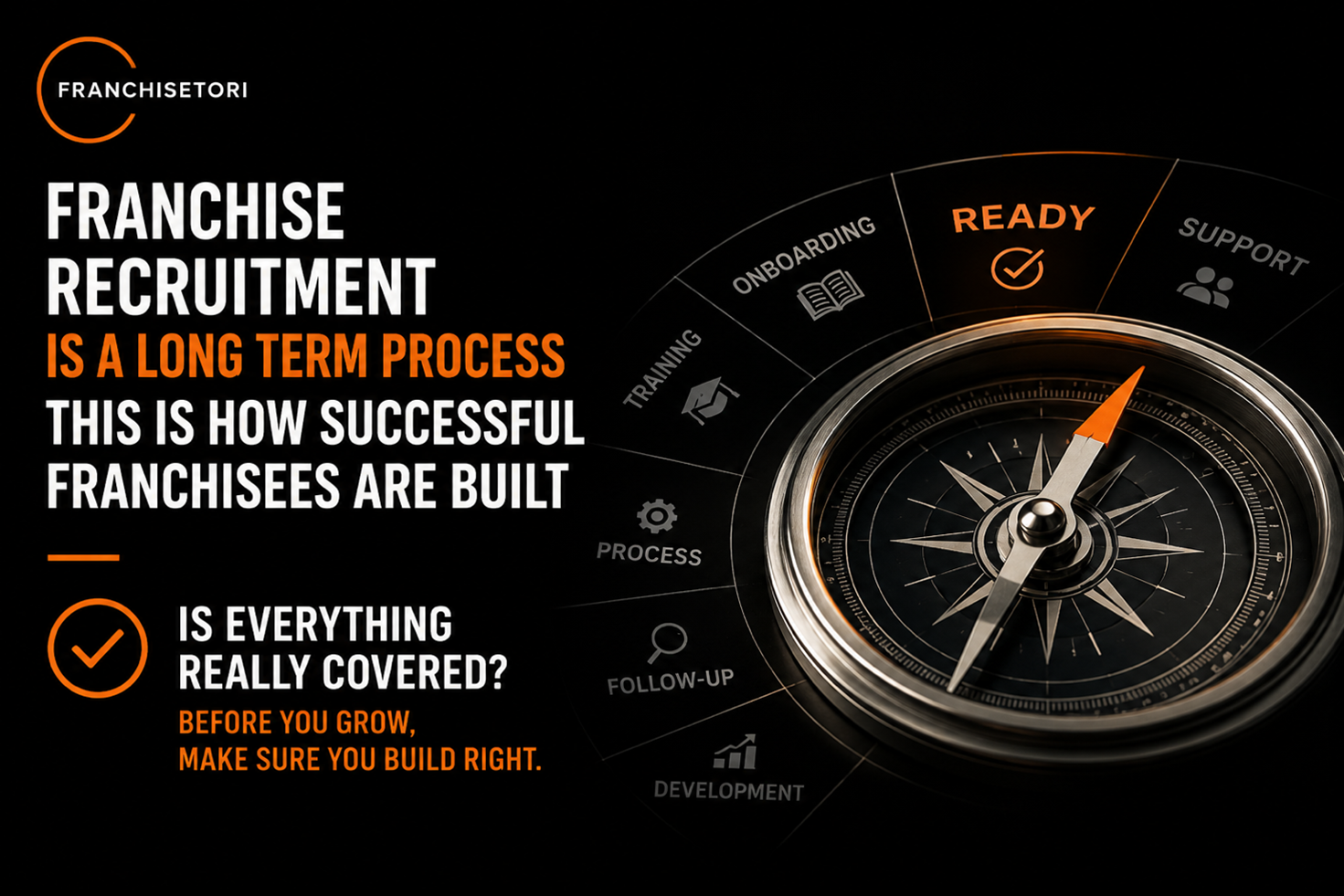
Franchise recruitment is therefore not simply about finding entrepreneurs. It is a long-term process whose goal is to build successful franchise entrepreneurs who understand the concept, commit to it, and are capable of developing the business together with the chain.
This is exactly why franchise recruitment, training, onboarding, early-stage support, and continuous franchise leadership should never be viewed as separate elements. Together, they form the foundation on which strong franchise chains are ultimately built.
The growth of a franchise chain is not built solely on the number of new entrepreneurs recruited, but on how well the chain is capable of supporting, training, and leading its new franchise entrepreneurs.
I also write about this topic in my upcoming franchising book because this issue constantly emerges in discussions related to franchise growth, entrepreneur recruitment, and franchise chain leadership.
Maisa Koivisto is the founder of Franchisetori and a long-time franchising professional with more than 25 years of experience in franchising, franchise chain leadership, and entrepreneur recruitment. She has been involved in building and developing several franchise chains and has completed hundreds of entrepreneur recruitments in practice.
Maisa Koivisto
Franchisetori
maisa@franchisetori.fi
www.franchisetori.fi